

Set up your project
Concept testing isn’t a toggle or a project type. It switches on as soon as your project has concepts, and you add those in the project setup flow. When you create a project, CoLoop walks you through a short series of setup steps. The one that matters here is Concepts: choose Yes when asked whether you’re testing any stimulus, concepts or messages, then add your concepts.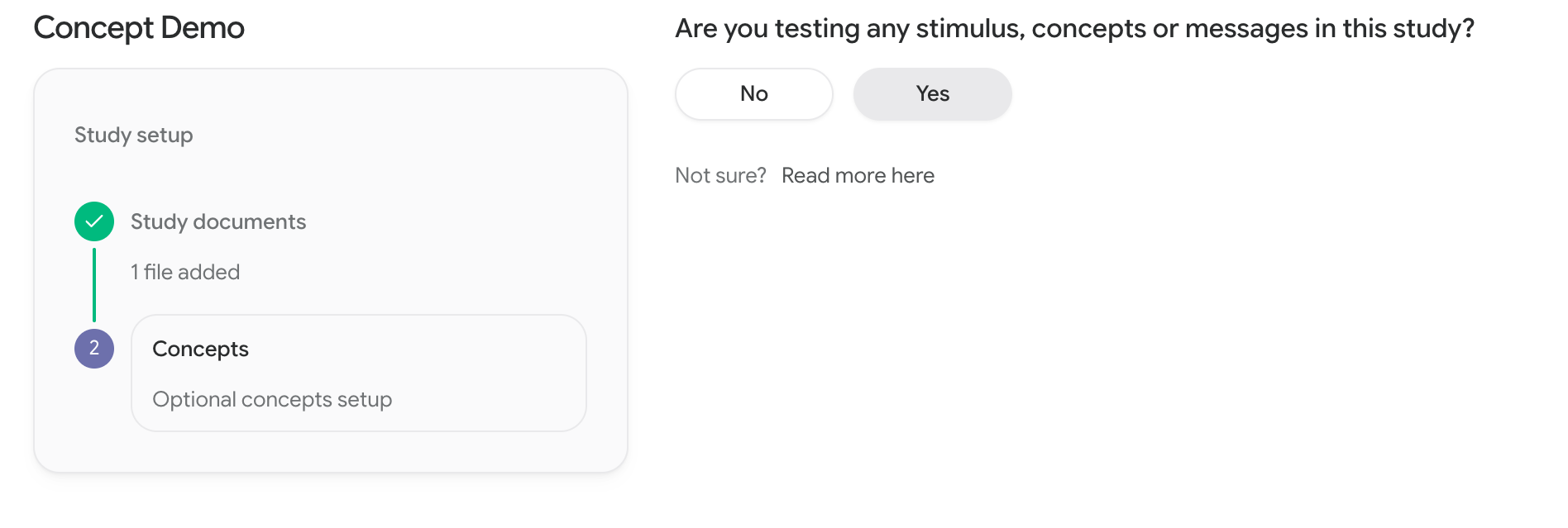 You don’t have to do this at creation time. You can add or change concepts later from the project sidebar using Add concepts / Edit concepts.
Add your concepts
In the editor, each concept has three parts: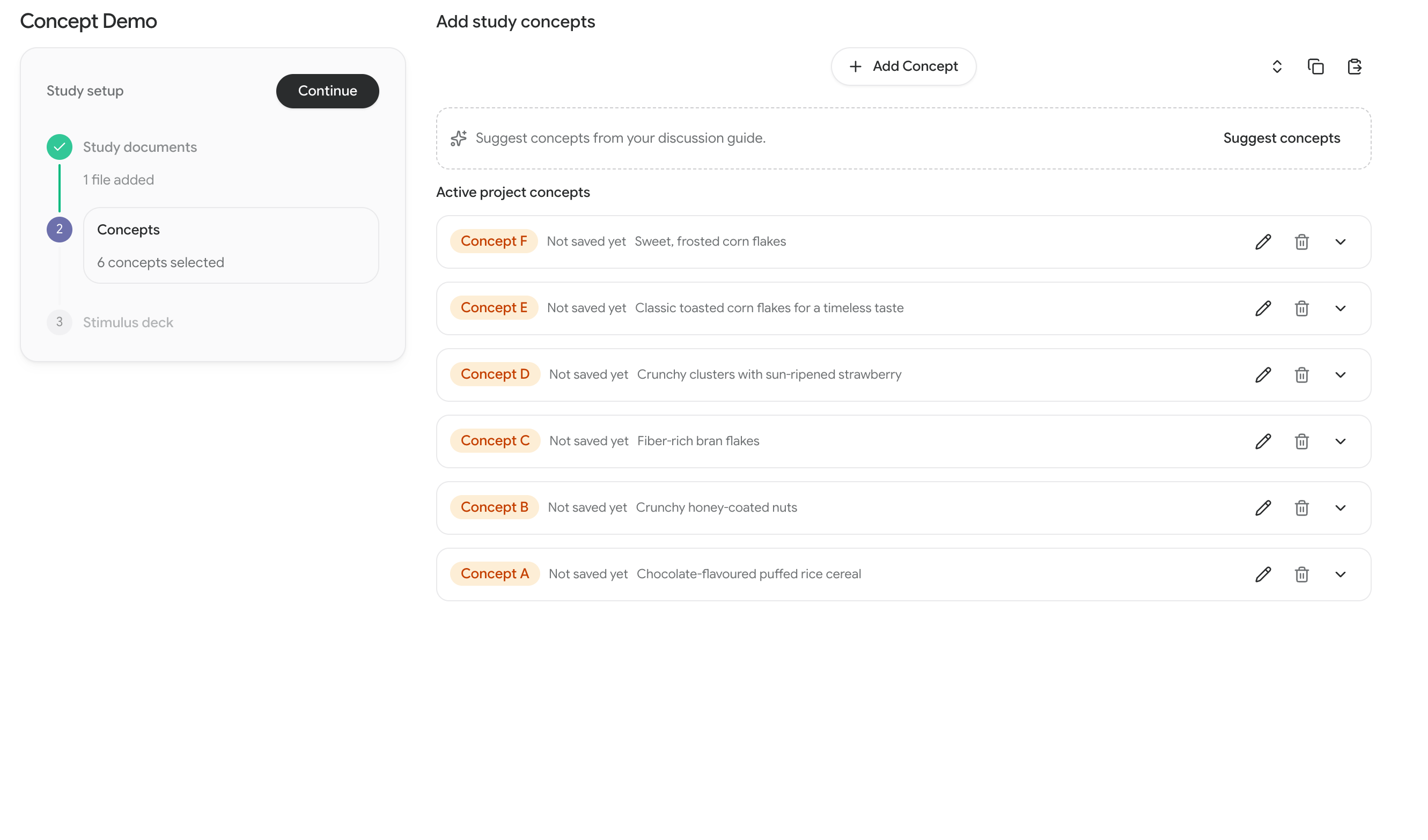 Without a deck, CoLoop only has the transcript to go on, so synonyms matter more here. Add every realistic way participants might name a concept:
- BenchSci → add the synonym “BS” if participants might use the abbreviation.
- Benchling → if you showed a distinct version (such as the pink one), add “Pink” so colour-based mentions link back to the concept.
- For multi-market studies, add the foreign-language versions of each concept name as synonyms.
- Expand all / Collapse all to work through a long list.
- Copy concepts to clipboard and Paste concepts from clipboard to move a concept set between projects, or to build it in a spreadsheet first.
Suggested concepts
If you uploaded a discussion guide in the Study documents step, CoLoop reads it and suggests concepts for you. Add the ones you want, edit them as you like, and ignore the rest. Nothing is added to your project until you accept it.Suggestions are a starting point, not a final concept list. Always check them against what you actually tested, especially the definitions, which CoLoop uses when deciding what to tag.
Reference concepts clearly in your interviews
Because detection relies entirely on the transcript, how you talk about concepts in the session matters:- Be consistent with terminology when referring to concepts.
- Introduce each concept clearly so it comes through in the transcript.
Upload and transcribe your files
- Upload audio, video, or text transcripts related to your study.
- For audio or video files, transcribe them within CoLoop and confirm speaker identities.
Check concept tagging
Review whether concepts have been tagged correctly. Without a stimulus deck, CoLoop only tags text segments that directly mention the concept names or their synonyms.
When no concepts are detected
If concept detection finishes without tagging anything in a file, the Files list shows a No concepts detected warning on that file with two actions:- Retry runs concept detection on the file again. Use this after fixing the likely cause, for example by adding synonyms for the ways participants referred to a concept, or correcting the transcript.
- Dismiss clears the warning from the file. Use this when the file genuinely doesn’t mention any concepts, such as a warm-up session or a group that wasn’t shown the stimulus.
Tag concepts by hand
Since this method only tags explicit mentions, you can apply concepts manually where needed. Highlight the segments of text, click + Add concept, choose the concept and confirm.