
- MROCs
- Online Qual Projects
- Open Ended Responses
- Interview Notes
- .xlsx (Excel workbooks), which can contain multiple sheets
- .csv (comma-separated values), which are imported as a single sheet
Format your spreadsheet files
CoLoop reads the first row of each sheet as column headers. You may need to edit your files so the first row contains your question or title headers, with participant responses starting immediately on the second row.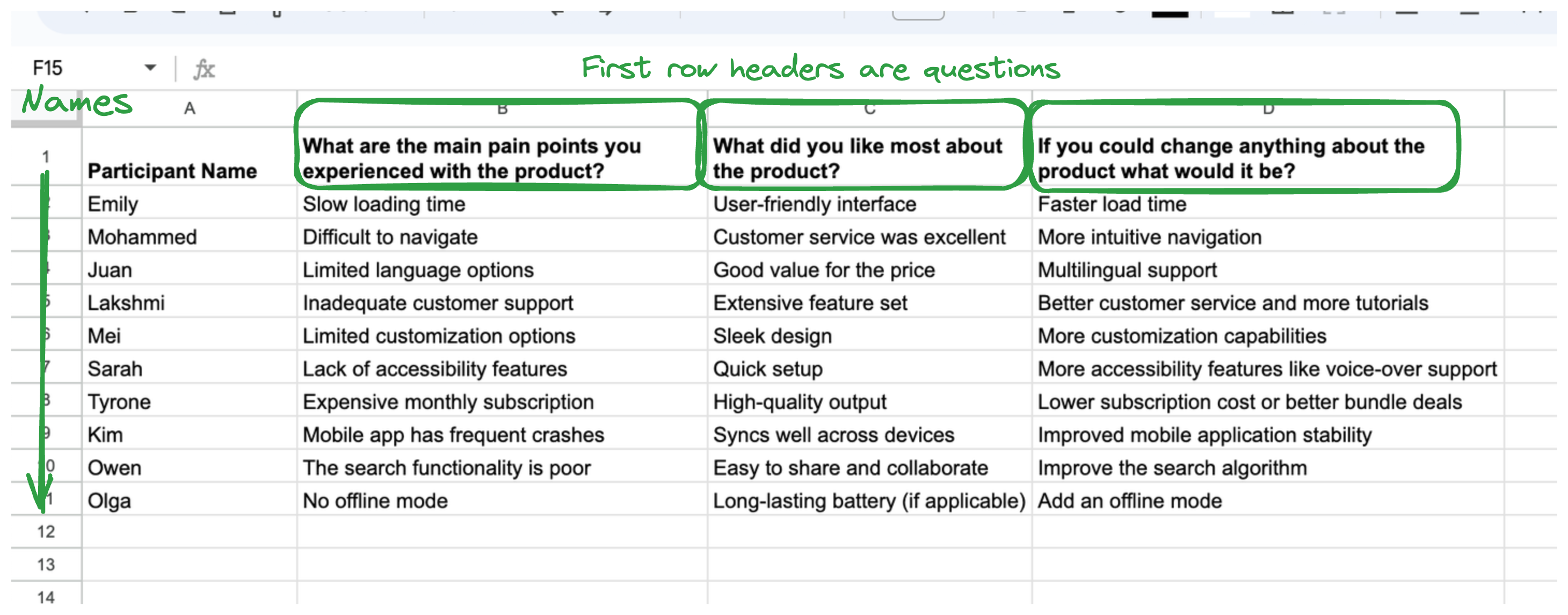 Spreadsheet file uploads are capped at 500 rows per file. Break larger datasets into smaller files before uploading.
Upload your spreadsheet file
Click Process community data to open the import mapping preview.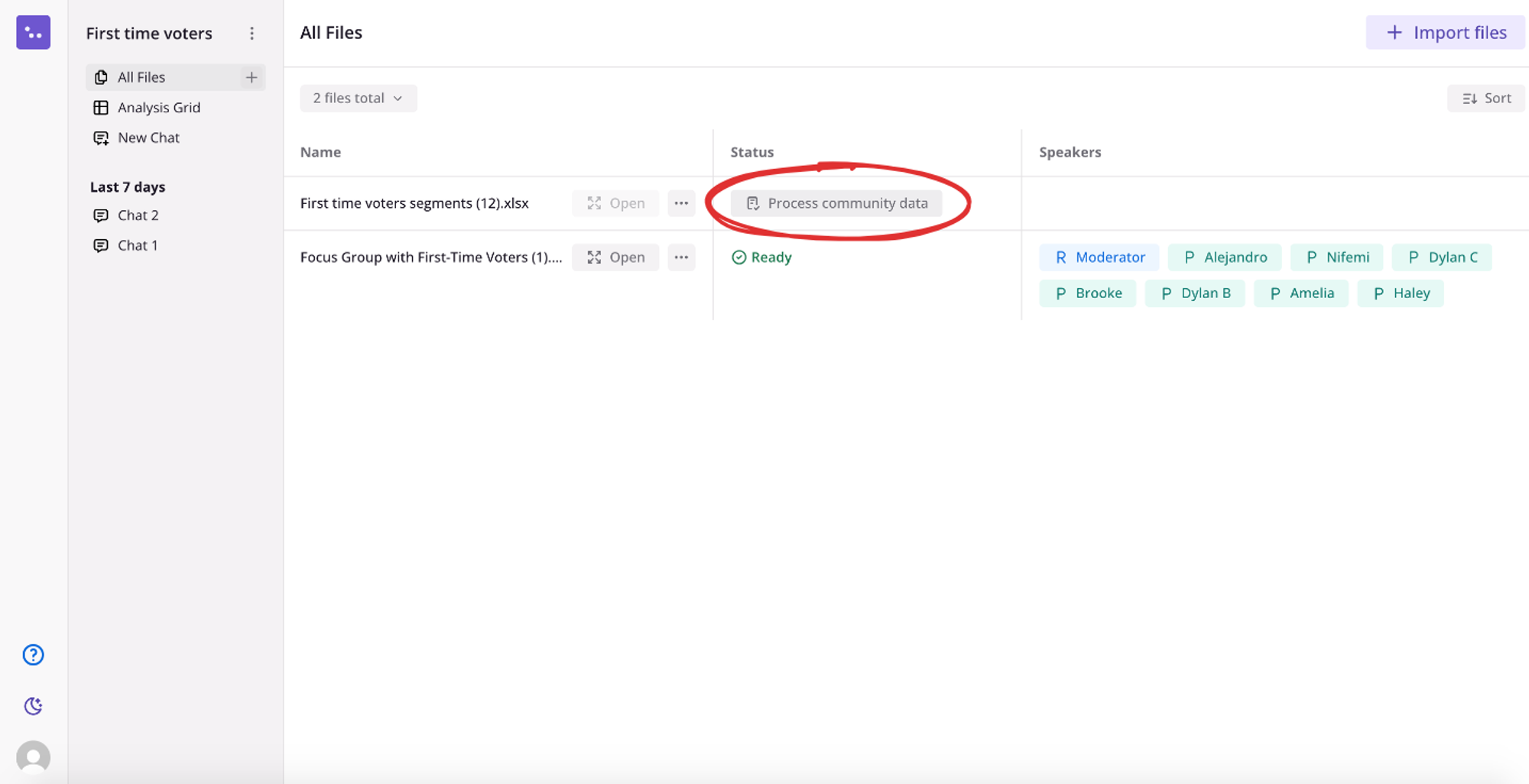
Map columns
When you open the import preview, CoLoop shows a data grid with a sample of your rows and one tab per sheet in your workbook. CSV files appear as a single sheet. CoLoop auto-detects likely column types based on header names, so many columns will already be mapped.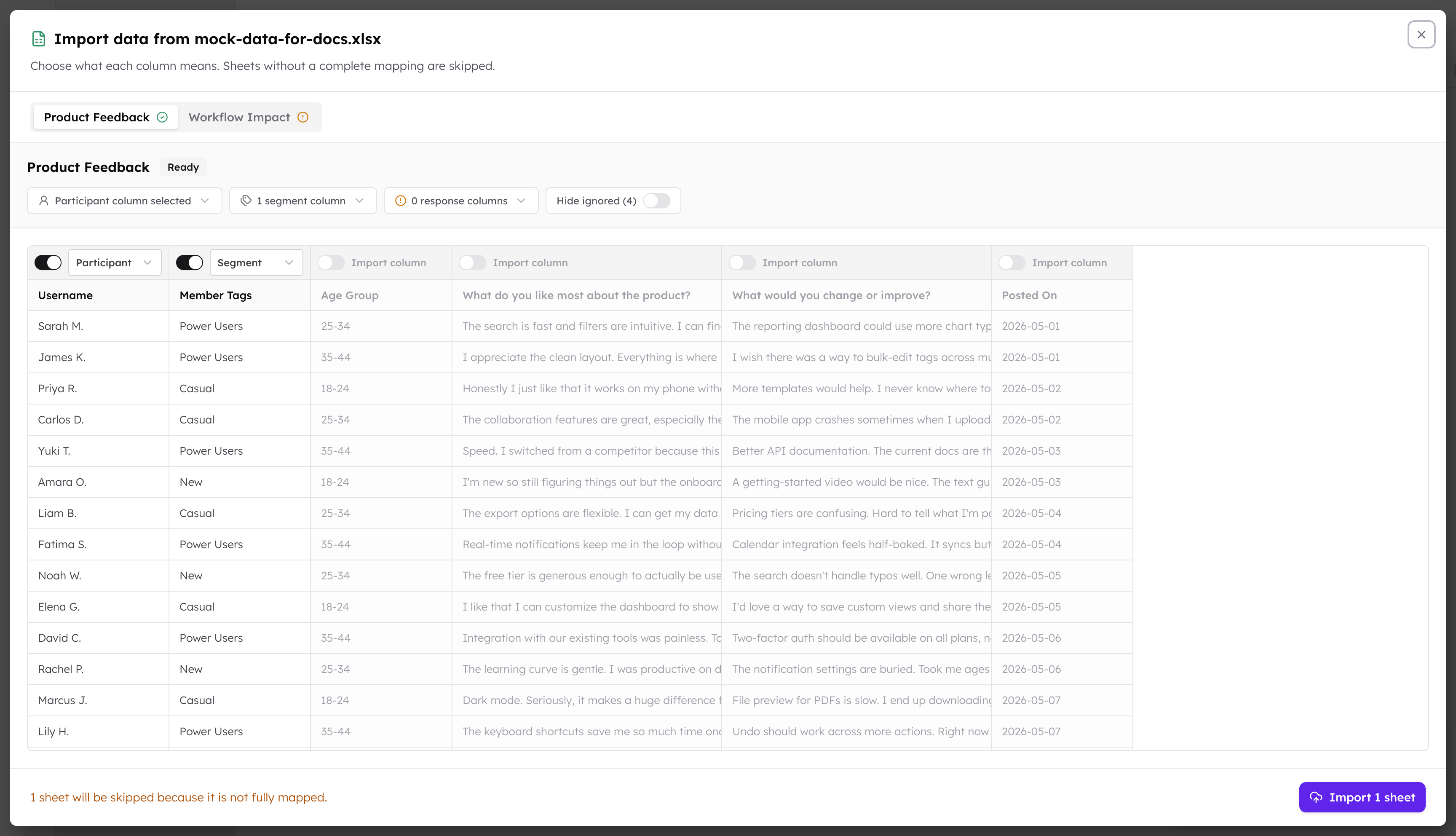
Toggle columns on and off
Each column header has a toggle switch. Turn it on to include the column in your import, or off to ignore it.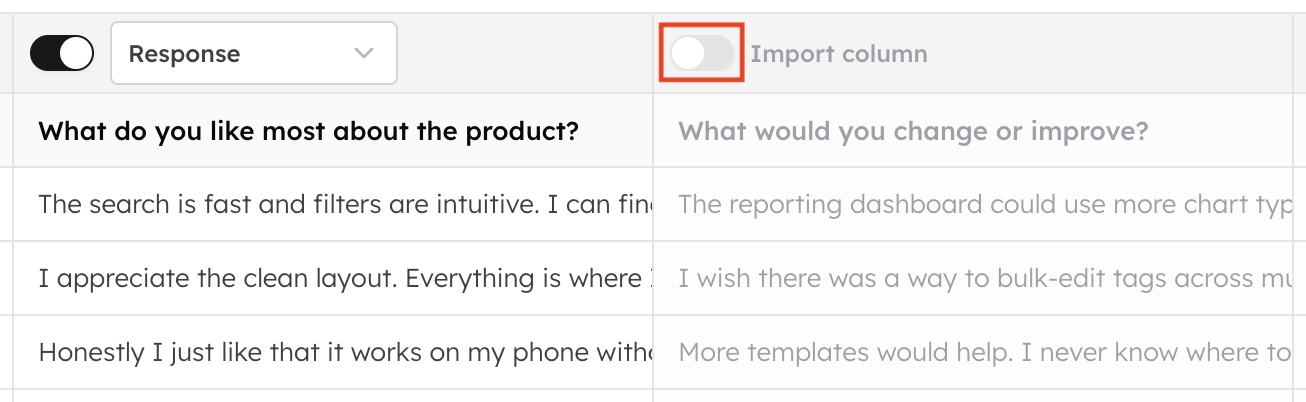
Set column types
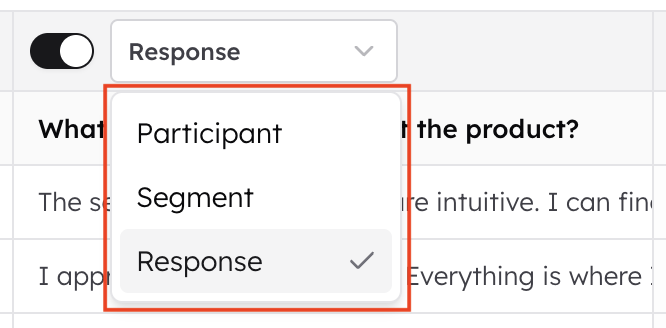
When a column is toggled on, use the dropdown next to the toggle to set its type:- Participant — the column that identifies who said what (e.g. “Username”, “Name”). Each sheet needs exactly one.
- Response — columns containing the text you want to analyze (e.g. question responses, discussion posts). You need at least one response or segment column per sheet.
- Segment — columns containing grouping information that will be applied as segments to your participants (e.g. “Member Tags”, demographic categories).
 Leave metadata columns like “CreatedAt” timestamps toggled off to keep your data clean.
Use the summary bar
The summary bar below the sheet name shows how many participant, segment, and response columns you have selected. Click the dropdown arrow on any summary chip to deselect columns in bulk, or to select all remaining unmapped columns as response columns.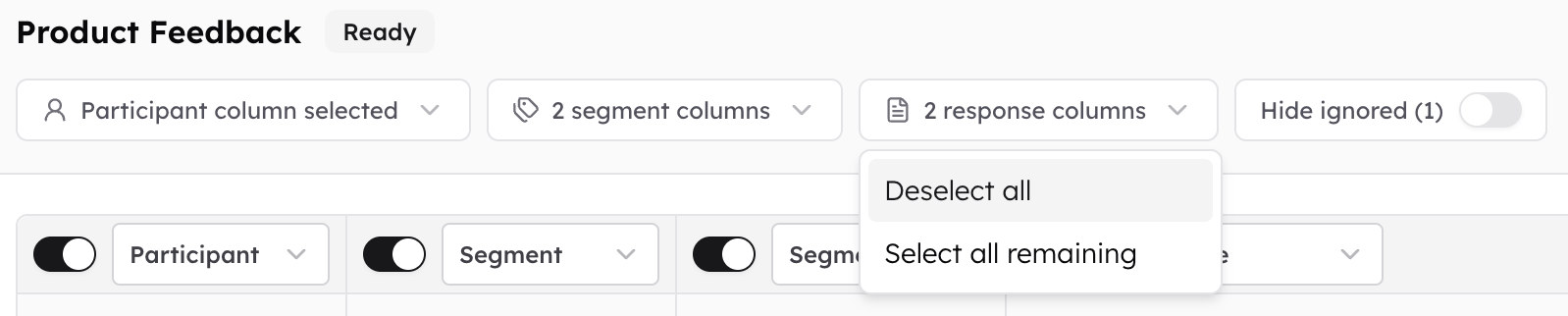 Toggle Hide ignored to collapse columns you have not included. This is useful for wide spreadsheets where only a few columns are relevant.
Check sheet readiness
A sheet is ready to import when it has one participant column and at least one response or segment column. The tab for each sheet shows its status:- A green check mark means the sheet is ready
- An amber warning icon means the sheet still needs column mapping
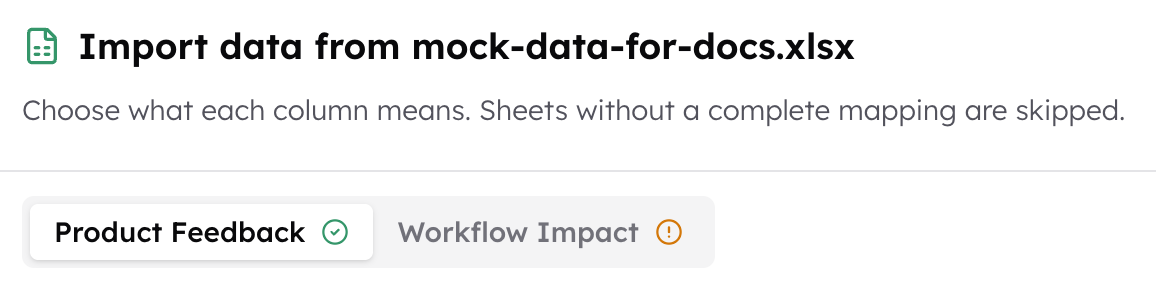 If a sheet is not ready, an alert at the top of the preview tells you what is missing: “Select one participant column and at least one response or segment column.”
Work with multiple sheets
If your xlsx workbook has multiple sheets, use the tabs to switch between them. Each sheet is configured independently. Sheets that are not fully mapped are automatically skipped during import.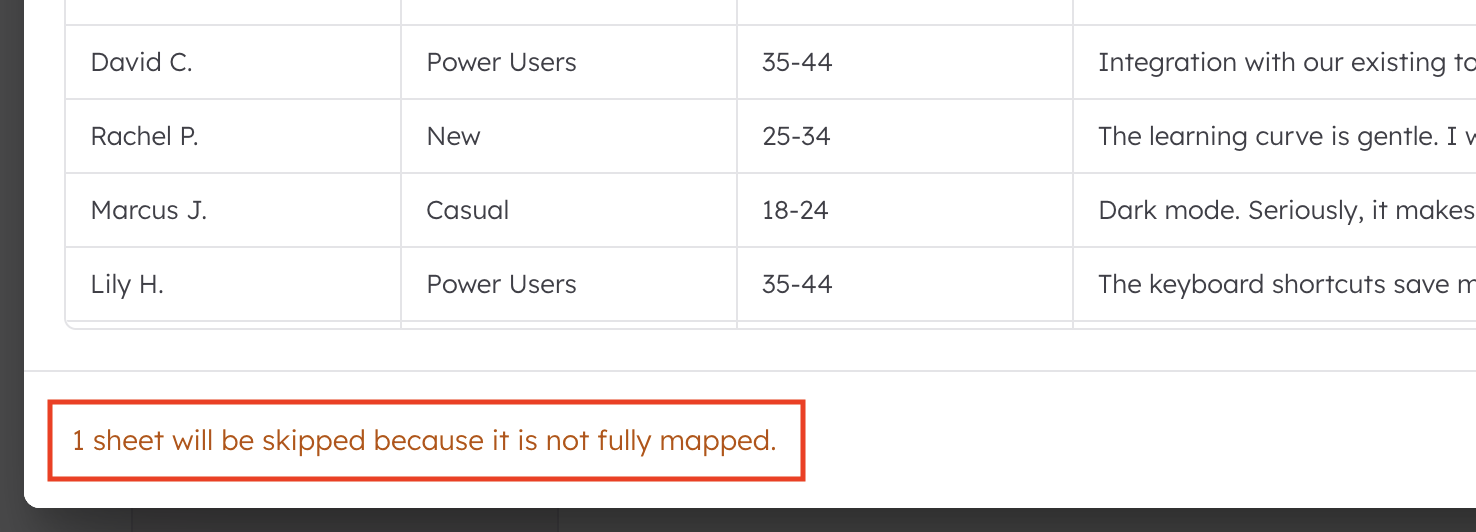
Import
The footer shows how many sheets are ready and how many will be skipped. Click Import N sheets to start the import.
Speaker merging
Participants with the same name across different sheets are merged into a single speaker. Make sure participant names are consistent across sheets if your data is spread across multiple files.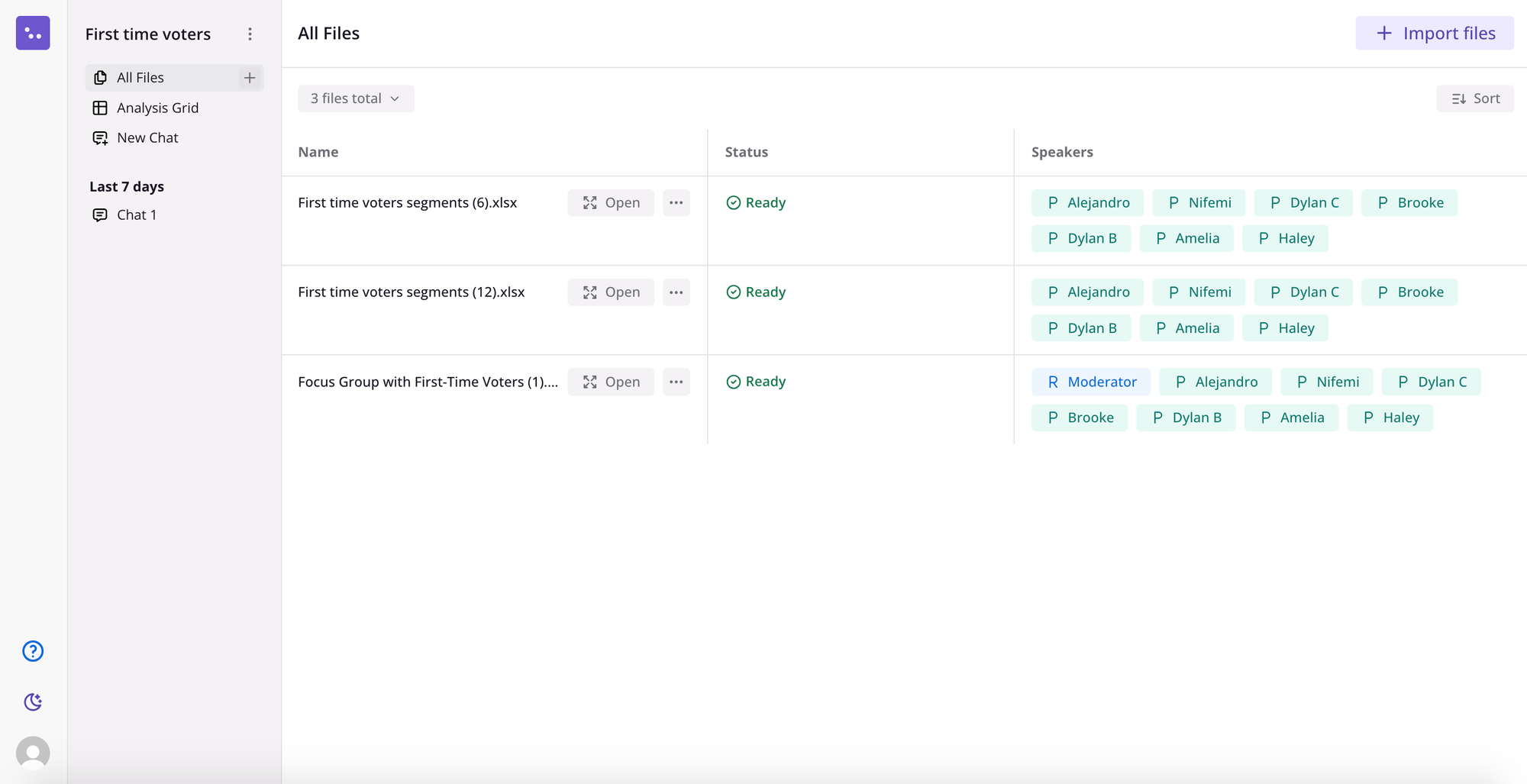
Common formatting problems
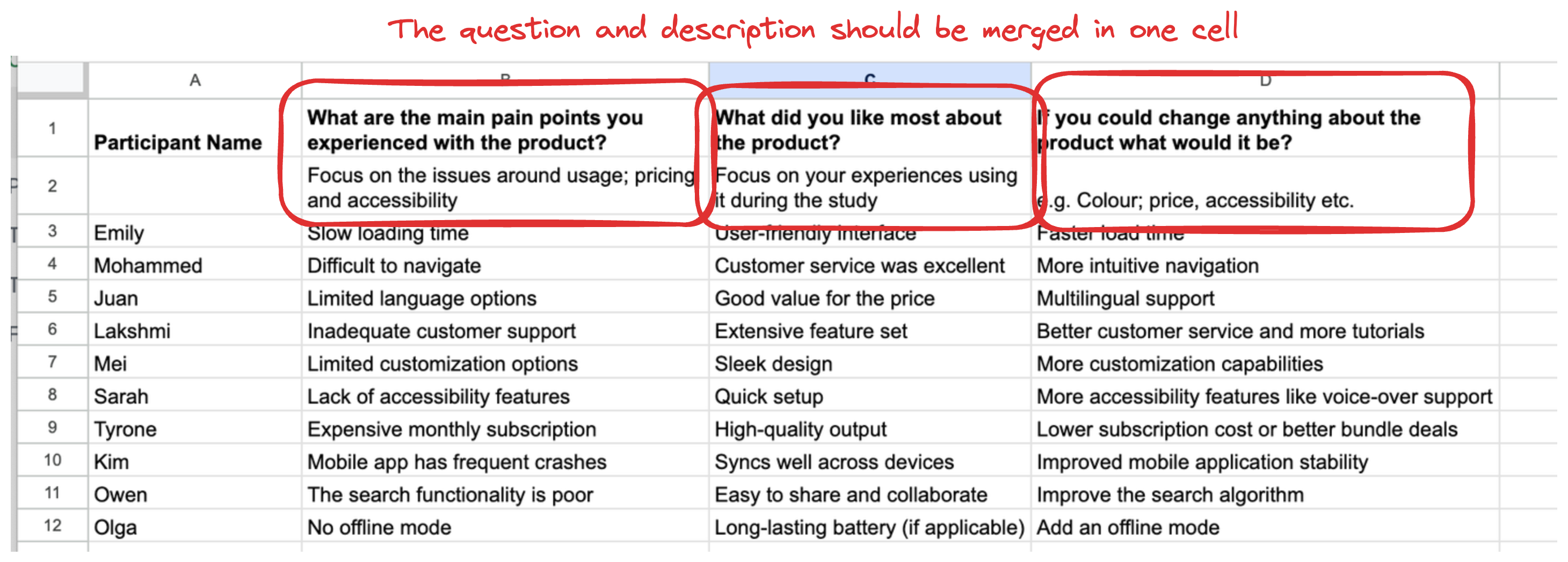
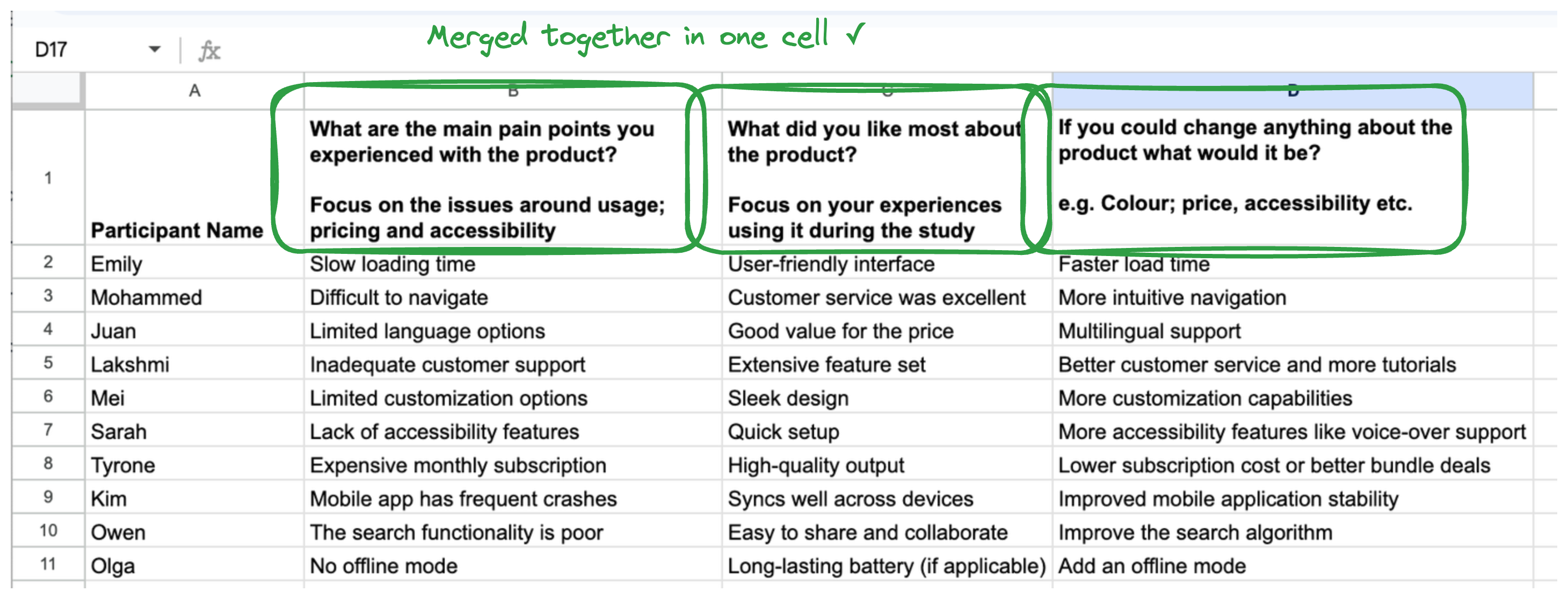
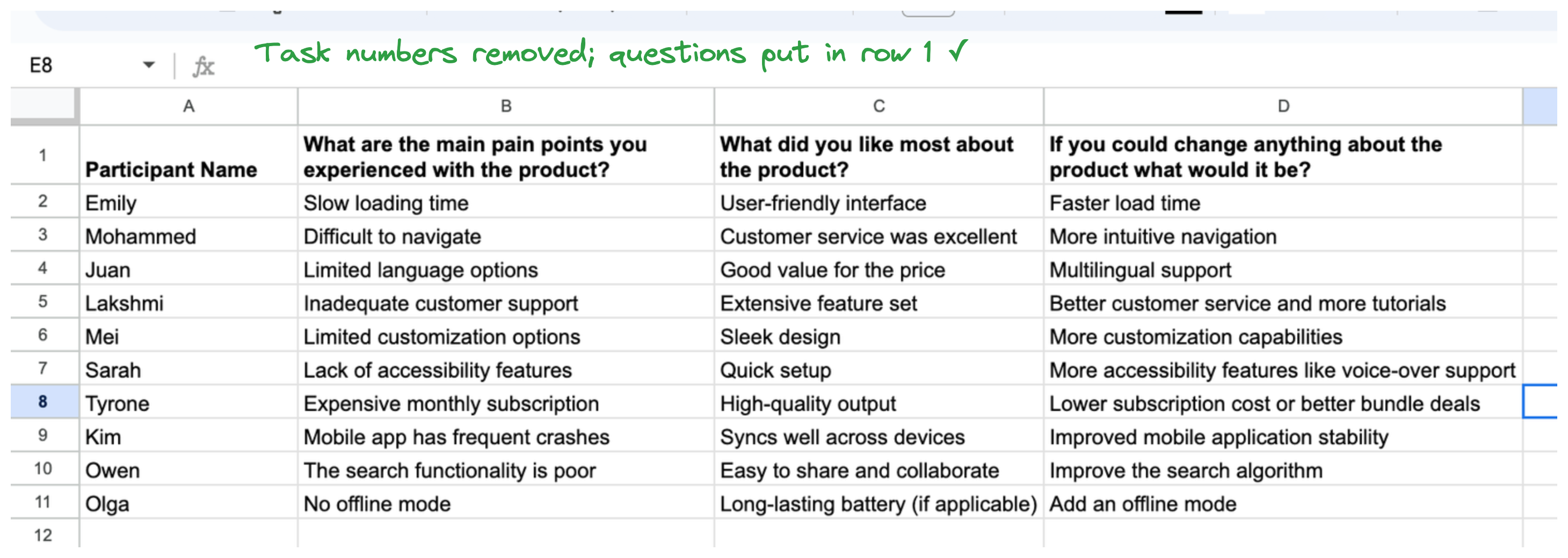
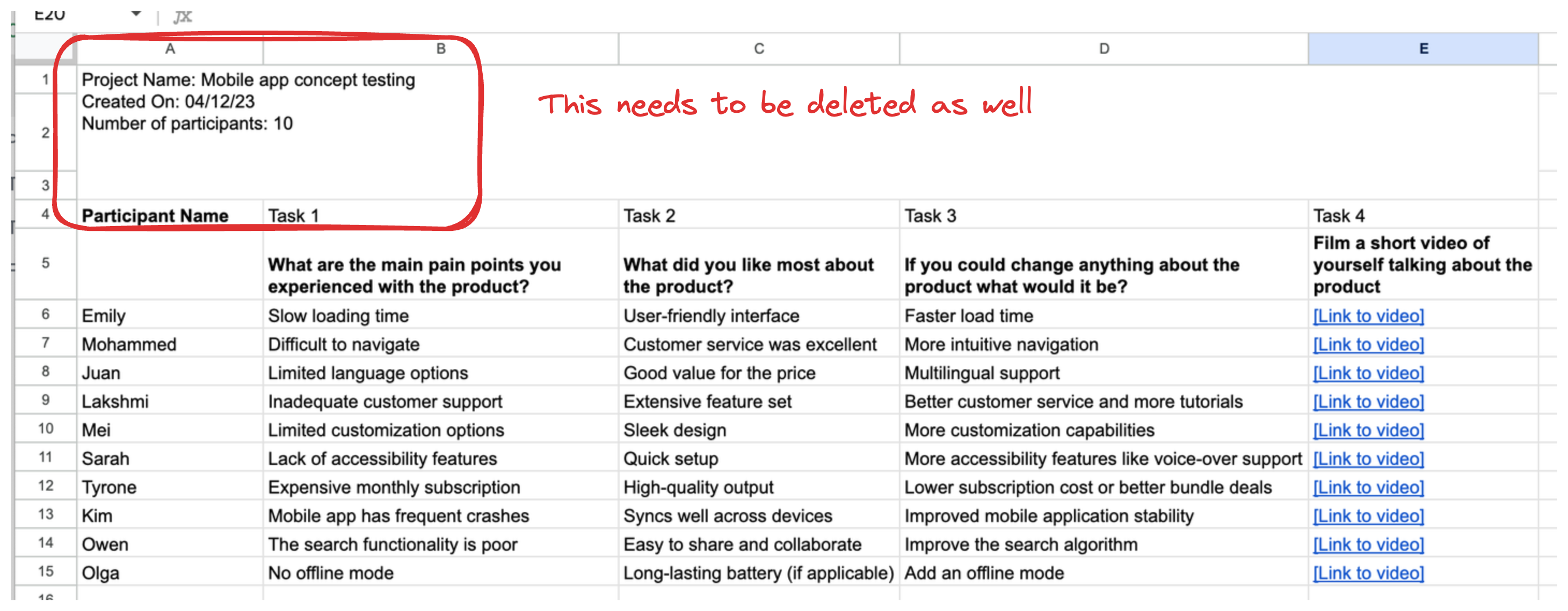
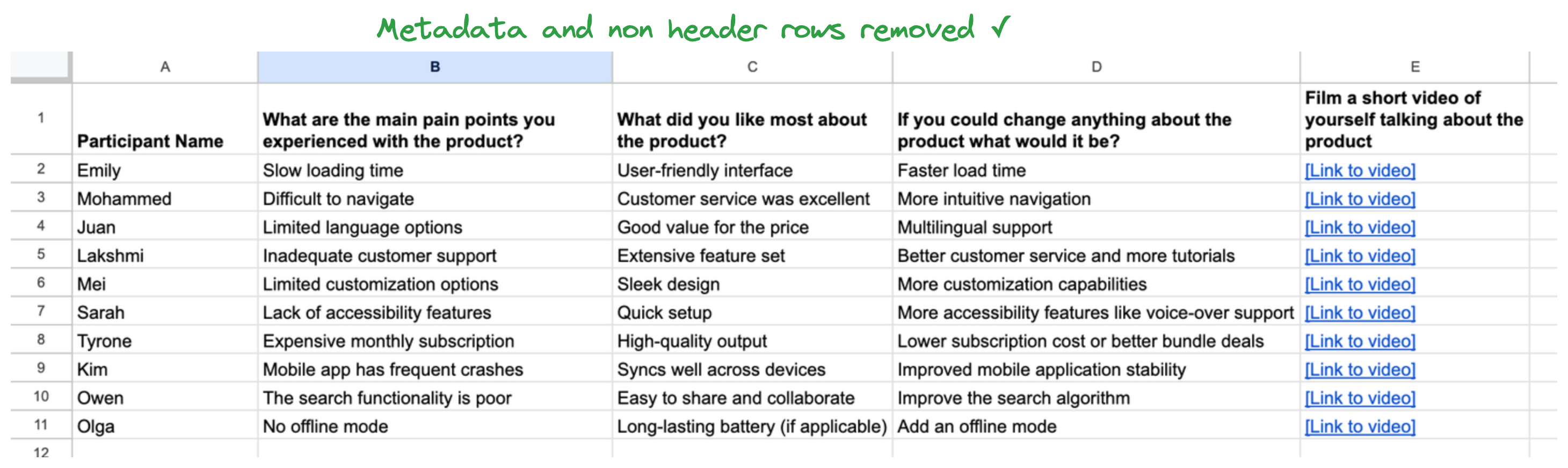
These examples use xlsx files, but the same rules apply to CSV files. The first row must contain column titles, followed immediately by participant responses on the next row. Remove any extra rows (task numbers, descriptions, metadata) that sit between the header and the data. Merge task descriptions or question prompts into the column header itself.Task numbers in the top row
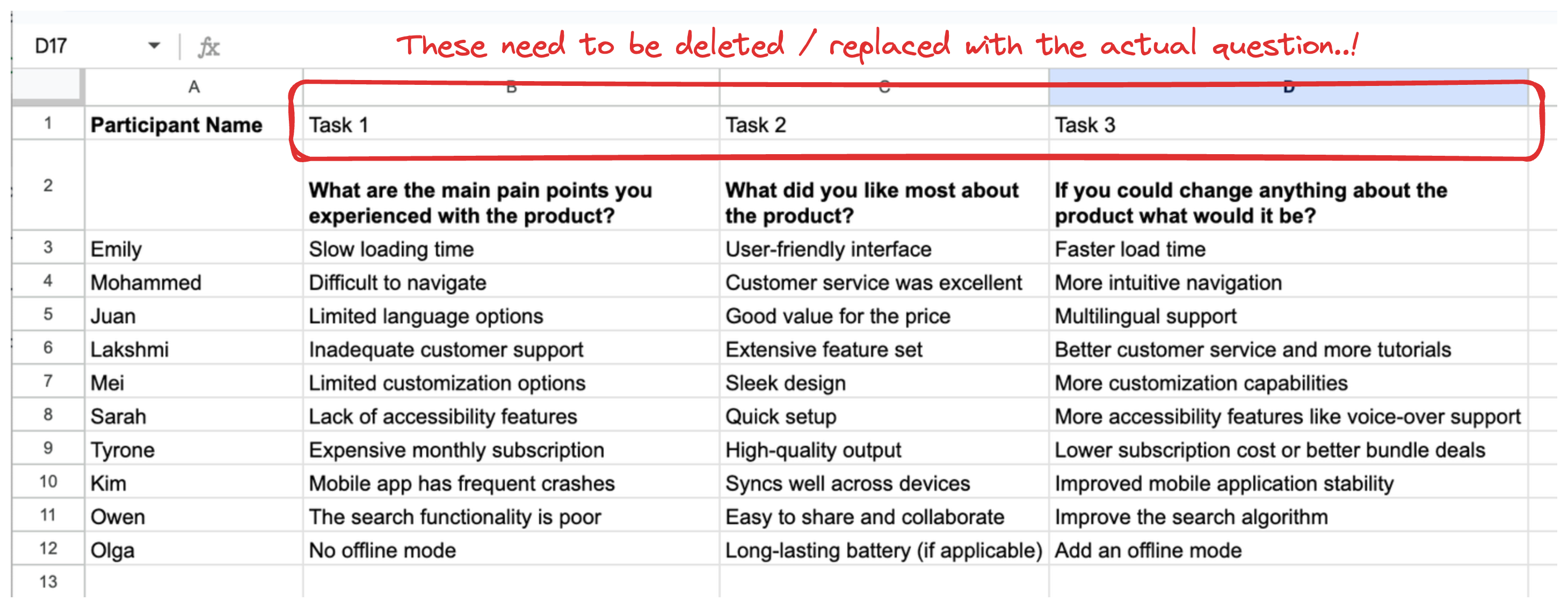
Metadata or descriptions in the spreadsheet
Question / prompt and its description spread across 2 rows